
Restoration of St. Roque Chapel, Wied Għammieq Cemetry – Kalkara
Standing within the cemetery at Wied Għammieq in Kalkara, St. Roque chapel is the result of a story that began almost two centuries ago when Malta was struck by one of the deadliest epidemics in its history. Its origins lay in the cholera outbreak of 1837 and the devotion that later developed for those buried at Wied Għammieq.
The first global cholera pandemic originated in Jessore, India, in 1817. 1 By 1829, the cholera gradually spread across Asia and Europe, reached Siberia and infected millions before arriving in Malta in June 1837. Dr. Salvatore Axisa identified the first local cases at the Ospizio (a charitable institution established in 1785 for accomodating the elderly, poor girls, persons suffering from mental illnesses, and female prisoners2) in Floriana when he examined two elderly inmates suffering from severe vomiting, diarrhoea, cramps, cold bluish skin, suppressed urination, and circulatory collapse (sudden failure of blood circulation in the body). 3 He recognised the symptoms as Asiatic cholera and immediately alerted the health authorities. Although his diagnosis was supported by several Maltese physicians, disagreement among medical experts led to delays with confirming the disease’s presence.
Once the diagnosis was confirmed, the authorities ordered the evacuation of the Ospizio. On 14 June 1837, 750 residents were transferred to Fort Ricasoli in Kalkara, , as it was believed that local conditions within the institution may have contributed to the outbreak.4
Between June and October 1837, the cholera epidemic claimed more than 4,000 lives in Malta and Gozo. 4 Many of the elderly inmates who died at Fort Ricasoli were buried in a field at Wied Għammieq. It is said that 855 cholera victims were interred there.
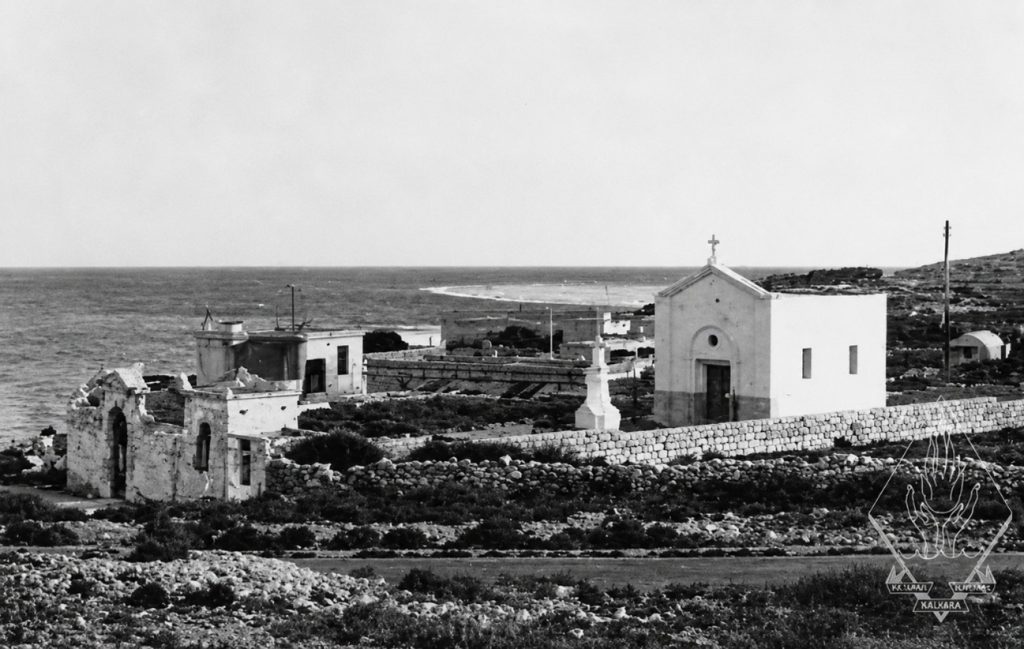
After the epidemic subsided, devotion towards the souls of the deceased grew, and pilgrims from across Malta began visiting the cemetery to pray for them and seek their intercession. In 1878, the scattered human remains were gathered into a single burial area, and in 1881 a pyramidal monument decorated with an image of Our Lady of Sorrows was erected through donations from the faithful. 5 An inscription on the monument in Maltese commemorates the victims of Ricasoli who died during the cholera outbreak and invites visitors to pray for the repose of their souls.Around ten years later, funds were gathered from this cemetry for building Kalkara’s first parish chuch. 6 The devotion shown towards these souls, together with the work and the dedicated efforts of Monsignor Carmelo Xuereb during his tenure as Parish Priest of Kalkara, led to the building of a new chapel dedicated to Saint Roch in the 1950’s, at the lower end of the cemeteryaccording to a design prepared by Chevalier Vincenzo Bonello. 7 In 1964, a new facade for the cemetry was built with more durable material to resist the sea spray. 8
Devotion towards the souls of Wied Għammieq remains strong to this day. The cemetery continues to attract visitors who come to pray, reflect, and pay their respects to those buried there, particularly the victims of the devastating cholera epidemic of 1837, whose memory remains deeply embedded in Malta’s religious and cultural heritage.
Restoration works
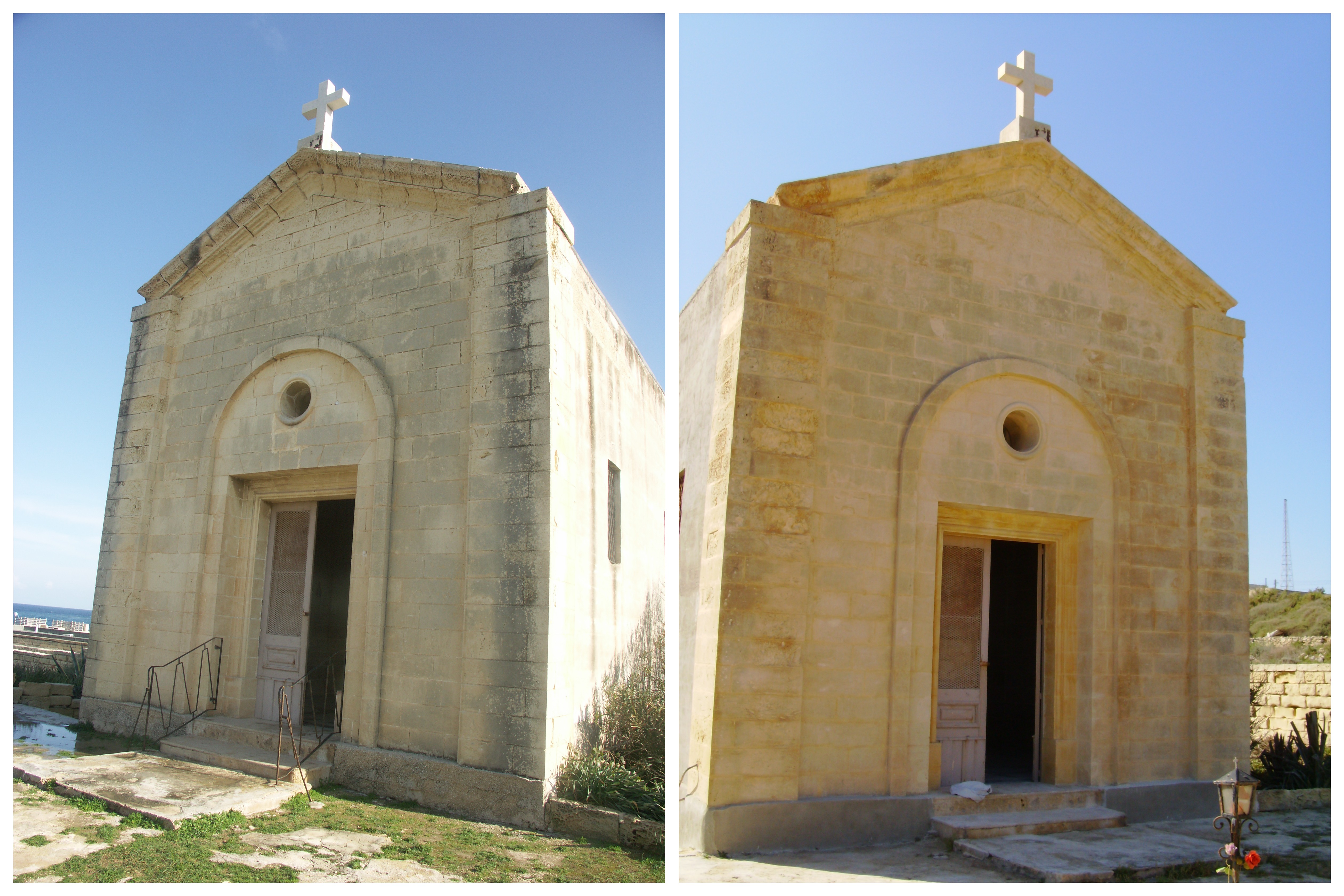
The restoration works included the dry-brushing of the main façade using nylon brushes to remove loose material and surface deposits, followed by the application of poultices to reduce salt contamination within the stone, particularly at the upper levels of the structure. Areas of deteriorated stonework were repaired using plastic repair techniques, while detached masonry elements were consolidated with carbon-fibre dowels set in epoxy resin. Open mortar joints were repointed using a compatible lime-based mortar. Works were also carried out on the interior of the chapel, including repairs to the concrete ceiling. Invasive vegetation was also carefully removed from the chapel and the cemetery. In addition, repair works on the roof and the external concrete walls were carried out by personnel from the Cleansing and Maintenance Division. The works were carried out in 2016, with further maintenance undertaken in 2024.
References:
- Pisani, S. (1970). The Malta cholera epidemic in 1837. The St. Luke`s Hospital Gazette, 5(2).
- Sciberras, S. (2014). L-Ospizju tal-Furjana fi zmien l-Ordni. Festa San Publju [Floriana] 2014.
- Pisani, S. (1970).
- Bonniċi, A. (1975, November 1). L-erwieħ ta’ Wied Għammieq. Leħen is-Sewwa. Is-Sibt, 1 ta’ Novembru 1975.
- Bonniċi, A. (1975, November 1).
- J.M. (1988) Il-Kalkara 90 sena parroċċa, ‘Festa ta’ San Ġużepp, Kalkara, 1988.
- Circolo San Giuseppe Filarmonika Sagra Familja (Kalkara, Malta), Bugeja, J., Debono, A. (2007) 170 sena ilu : ċimiterju ta’ Wied Għammieq, ‘170 sena ilu : ċimiterju ta’ Wied Għammieq’, p. 31
- J.M. (1988) Il-Kalkara 90 sena parroċċa, ‘Festa ta’ San Ġużepp, Kalkara, 1988.