Restoration of the Church of Our Lady of Graces, Ta’ Ċejlu, in Marsa
With the development of Portu Novu from 1860 onwards during the time of Governor Sir John Gaspard Le Marchant (1803–1874), the population of Marsa gradually increased from the few farmers and fishermen who lived there. In 1870, the lawyer Giuseppe Zammit, who owned land in the area known as Ta’ Ċejlu, built a church dedicated to Our Lady of Graces from his own expenses.
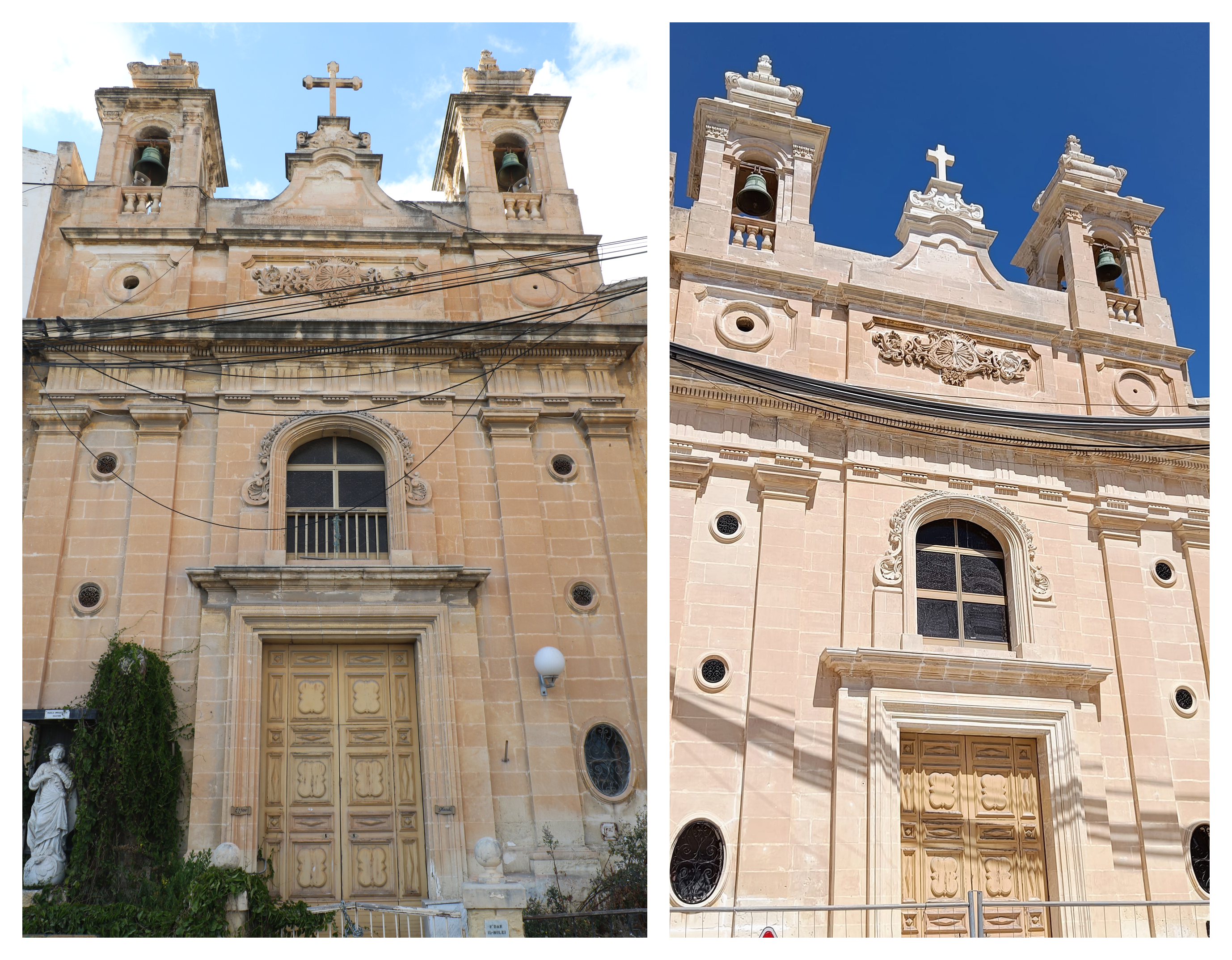
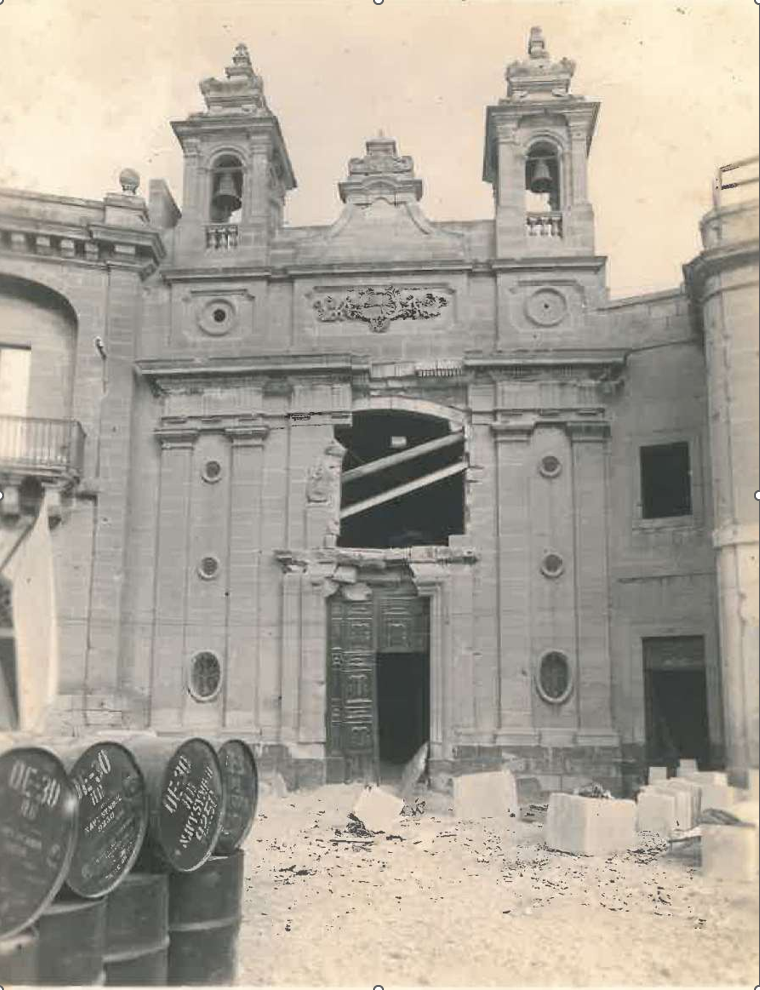
The Church of Ta’ Ċejlu, as it is commonly known, was built in the Baroque style, with a dome and two bell towers containing a set of bells. For many years, it was the only church close to the residents of Marsa until the parish church of the Holy Trinity was built in 1909. The church suffered damages during the Second World War (see Figure 2).1
Shortly after World War II, the ship’s bell of the MV Pampas was installed in the belfry of Ta’ Ċejlu Church as a memorial to Malta’s wartime endurance. 2 The Pampas was part of Convoy MW10, which reached Malta in March 1942 under heavy German and Italian attacks. 3 Although the ship eventually sank in Grand Harbour, part of its cargo was salvaged which helped to sustain Malta during the siege. For many years, the Pampas bell rang alongside the church’s two 19th-century bells cast by Giulio Cauchi. However, being a ship’s bell, its tone proved too loud and unsuitable for the belfry. In collaboration with the Malta Maritime Museum, Fr. Alfred Tabone OFM arranged for its replacement with a smaller bell from St Matthew’s Church, Treorchy, Wales that was supplied by the Keltek Trust. After it was removed from the bell tower, the original Pampas bell was then donated to the Malta Maritime Museum where it now forms part of its collection of wartime maritime artefacts alongside the bells of Breconshire, Talabot, and several Royal Navy escort ships.4
On 21 June 1958, the church became the Official Church of the Apostleship of the Sea and passed under the care of the Franciscan Friars of Ġieżu.5
The Restoration Process
The restoration works included the cleaning of the façade and bell towers from dirt and the dark crust that had accumulated over time, as well as the removal of paint and tar from various areas. The works also included the re-pointing of missing joints and the replacement of deteriorated stone, particularly in the bell towers and the upper part of the façade. In addition, the cement rendering and the marble plinth that had been added later were removed. Extensive restoration was carried out on the pedestal of the cross, and the cross itself was replaced by one which reflected the original proportions from before the Second World War. Accretions, such a niche and balustrade on the parvis, that were recent additions, were removed.
References:
- Dimech, P. (1990). Kappelli fil-Marsa. Il-Marsa : programm tal-festa tas-Santissima Trinità, 1990
- Magro Conti, E. (2020, June 9). Maltese Projects – Gallery: Marsa, Our Lady of Graces. KELTEK TRUST. Retrieved May 18, 2026, from https://www.keltektrust.org.uk/malta.html
- Magro Conti, 2020.
- Dimech, P. (1990).